


LANDSUPPORT is the global winner of the “Falling wall”

Prof. Fabio Terribile is the coordinator of LANDSUPPORT (awarded as a “success story” by the European Commission) and explains in his video why LANDSUPPORT is breaking the wall of open access tools for agriculture, forestry and land management. LANDSUPPORT is an H2020 project aimed at developing a completely free and open-access geospatial decision support system (www.landsupport.eu) dedicated to supporting sustainable agriculture and forestry, assessing land use trade-offs and contributing to the development and implementation of land use policies in Europe and to selected United Nations SDGs. It combines satellite, drone and remote sensing data with cutting-edge models to bring relevant information into the “hands” of politicians, farmers and even citizens and help them make informed environmental choices. LANDSUPPORT brought together 19 partners from 10 countries in Europe, the Middle East and Asia, to achieve a series of innovative scientific, technical and land policy objectives. It has provided 15 macro tools, with more than 100 on operational tools, to reconcile the major political ambitions in agriculture/environmental sustainability with operational reality. link to the Falling wall page
The first year of the BENCHMARKS project concludes – Annual General Meeting, February 19 – 22, 2024, Coimbra (Portugal)

The European Commission, as part of the mission for Soil Health and Food (SH&F), has set a goal to have 75% of European soils healthy or significantly improved by 2030. This goal aligns with other major European initiatives such as the Green Deal and the EU’s Farm-to-Fork strategy, as well as preparations for a new EU law on soil health protection, aimed at protecting soils on the same legal basis as air and water. Measuring the success of these public and private initiatives through the harmonized monitoring of European soils is an essential but hugely complex task. It requires consistent but context-specific monitoring across multiple scales and land uses in all EU Member States. To address these challenges, the Horizon Europe project “BENCHMARKS,” which involves 29 partners from across Europe including CRISP, aims to develop and evaluate a transparent, harmonized, and cost-effective multiscale and multi-user monitoring framework that aims to provide a clear soil health index for benchmarking, using relevant assessment indicators that are applicable to land use and logistically feasible. This work is supported by 31 case studies across Europe (7 more than the original 24) where the indicators are tested; CRISP is responsible for 3 case studies, all in the Campania region. From February 19 to 22, the Annual General Meeting of the BENCHMARKS project took place in Coimbra (Portugal), where the work carried out during the first year of the project was presented, and the groundwork was laid for future actions, mainly related to the upcoming start of the soil sampling campaign in the case studies across Europe. [Website]
Permanent exhibition dedicated to the soils of the world – July 2024

By next summer, the inauguration of the new setup at MUSA (Museums of Agricultural Sciences) will take place, during which CRISP will present a permanent exhibition dedicated to the soils of the world. Stay tuned!!!
A framework law for Italian soil within the European strategy. July 19, 2022

The event will take place in the CHAPTER ROOM at the Cloister of Santa Maria Sopra Minerva in Piazza della Minerva 38, Rome Program
Palazzo Madama, Rome, June 28, 2016. Presentation of SOIL MONITOR

At Palazzo Madama, CRISP with SOIL MONITOR On June 28, 2016, in Rome, in the Caduti di Nassirya hall of the Senate of the Republic, Fabio Terribile and Giuliano Langella presented SOIL MONITOR, an innovative tool for assessing soil consumption at the national scale and supporting the implementation of: – Framework bill for the protection and sustainable management of soil (AS 1181) – Bill for the containment of soil consumption (AS 2383) – Law on environmental crimes (L. May 22, 2015, n. 68) – Environmental connection (L. December 28, n. 221) SOIL MONITOR – the result of a long research effort by CRISP – a tool capable of monitoring and evaluating soil consumption across the entire Italian territory with high spatial detail. Soil Monitor is a web application – freely accessible – to support decisions on territories. Presentation_SoilMonitor – June 28, 2016 Event poster Soilmonitor
Senate of the Republic, Rome, January 24, 2017. Prof. Fabio Terribile in a hearing on the bills for soil consumption

Today we know that the soil is subjected to continuous and increasing environmental pressures that cause alarming and clear signs of its degradation and often the irreversible loss of its irreplaceable productive and environmental functions The research world wanted to make its contribution to defending Italian soil, to manage it sustainably, and to increase the multifunctional productivity (agronomic, environmental, socio-economic) of the Italian landscape. On January 24, Prof. Fabio Terribile was heard in the Senate at the joint Committees 9th (Agriculture and Agri-food Production) and 13th (Territory, Environment, Environmental Goods) of the Senate of the Republic, on the bills nn. 2383, 769, 991, 1181, and 1734 (soil consumption). Fabio Terribile, as the Director of CRISP and a member of the presidency committee of AISSA – an association that unites the agricultural scientific societies in Italy – thus became the spokesperson for the Italian research world in the sectors of agriculture, forests, and agri-food. The hearing on January 24 in Rome is an important milestone in a journey that has already seen the research world – two AISSA working groups coordinated by Fabio Terribile – engaged in drafting a text that later became the bill 1181 “Framework law for the protection and sustainable management of the soil.” Video of the interventions
Il Sole24 ore. Soil consumption, to monitor it area by area “SOIL MONITOR” is born
Il Sole 24 ore on SOIL MONITOR The presentation of SOIL MONITOR at the Senate had wide coverage from the press. Il Sole24ore announced the birth of the web platform to monitor soil consumption area by area. Il Sole 24 ore on Soil Monitor Press review CNR on Soil Monitor
Pertosa, April 22, 2016. The first Soil Museum in Italy is inaugurated
Soils on display. CRISP to realize the first Soil Museum in Italy On April 22, 2016, in Pertosa (SA), within the compound … the first permanent Soil Museum in Italy was inaugurated, created by the MIDA Foundation – Integrated Museums of the Environment. A unique exhibition on soil, 1,500 sqm of covered exhibition space and connected paths outside the museum. The heart of the Museum is the Pedon Hall created by the CRISP Research Center. The narrative starts from 4 types of soil representative of some of the most important landscapes and ecosystems of Campania. It presents four pedons: soils taken in the field and impregnated with paints that act as true open volumes to tell details, processes, and functions through their stratification and the multimedia products that accompany them. Miniguide to the Museum
FitzPatrick Collection. A special contribution from the Federico II University
With the start of the year 2017, the Federico II University of Naples has provided a special contribution for the FitzPatrick collection. The contribution arises from the awareness of the unique importance of the collection of thin sections of soil donated to CRISP by Fitzpatrick, one of the founding fathers of soil micromorphology and certainly one of its most important exponents. The over 2500 thin sections preserved at CRISP come from a wide variety of geographical areas of the world and tell and testify to soil types, characteristics, and processes that are very different from each other. The special contribution from the university aims to enhance the collection, contributing to the setup of spaces not only for display but also equipped with tools and means useful for micromorphological analysis.
Il Mattino. Satellites, apps, and GPS anti-waste thus flourishes the web agriculture
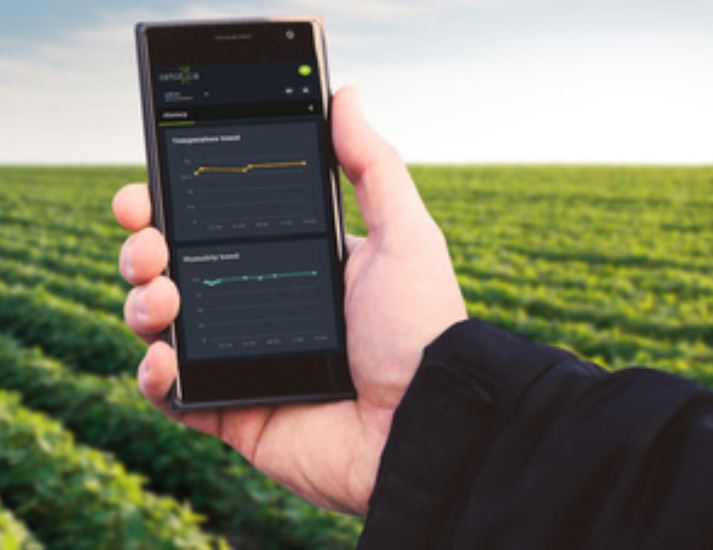
On Il Mattino, an interesting article also talks about the activities of CRISP carried out in collaboration with the Department of Agriculture of the University Federico II of Naples. link to the article